

Chiropractor in Sydney
The Ultimate Guide to Chiropractic Care
A comprehensive guide for Australian consumers exploring chiropractic care as a health and rehabilitation option by Movement Rehabilitation.
Pain shouldn’t control your life. Yet, for millions of Australians, chronic discomfort is a daily battle.
Whether it’s a stiff neck from long hours at a desk in a Sydney office, a persistent ache in your lower back after a weekend of sport, or recurring headaches that disrupt your day, finding a lasting solution can be frustrating.
If you’re exploring your health options, you’ve likely come across chiropractic care. But what is it, does it work, and is it the right choice for you?
As a leading provider of exercise physiology, we at Movement Rehabilitation believe in empowering you with trustworthy information.
This guide will cut through the jargon and marketing hype to give you the facts, so you can make an informed decision about your health and wellbeing.
What is Chiropractic Care?
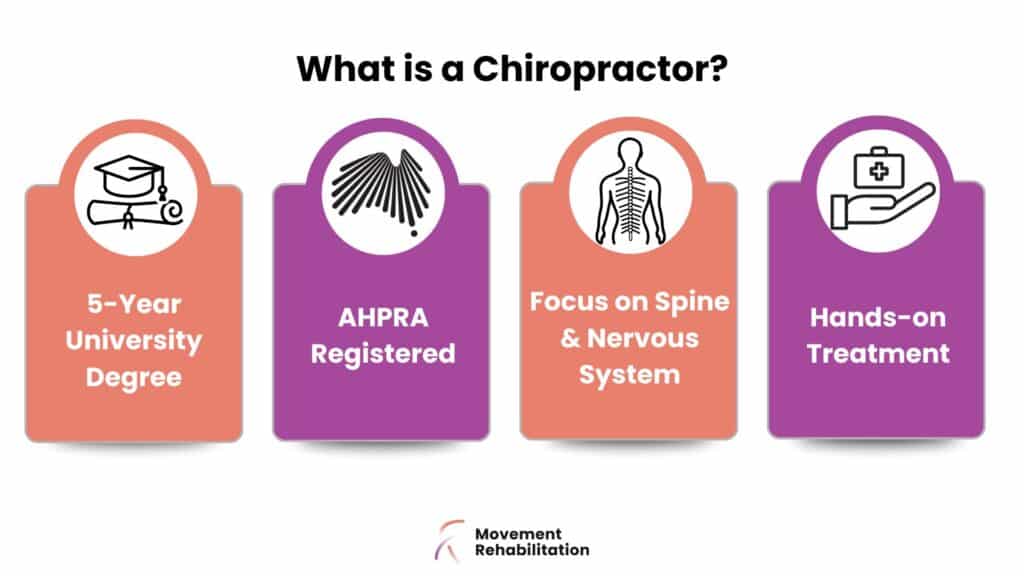
In Australia, a chiropractor is a government-registered allied health professional who has completed a five-year university degree.
They are trained to diagnose and treat conditions affecting the musculoskeletal system—your bones, muscles, and joints.
It is important to note that chiropractors are not medical doctors but are a key part of the allied health landscape, often working alongside GPs, physiotherapists, and exercise physiologists.
The core philosophy of chiropractic care is that the structure of the body, particularly the spine, influences its overall function.
Chiropractors use a range of hands-on techniques, with the most common being spinal manipulation (also known as a ‘chiropractic adjustment’), to restore movement, reduce pain, and improve the body’s ability to heal itself.
All practising chiropractors in Australia must be registered with the Australian Health Practitioner Regulation Agency (AHPRA), which ensures they meet strict standards for education, safety, and professional conduct.
Common Myths About Chiropractic Care
Misinformation can create unnecessary fear. Let’s debunk some common myths with facts.
| Myth | Fact | "Once you start, you have to go forever." | You are in control of your care. While some people choose ongoing maintenance care, a treatment plan for a specific issue will have a clear end point. |
|---|---|
| "Chiropractors aren't real doctors." | In Australia, chiropractors complete a 5-year university degree and are registered allied health professionals, just like physiotherapists. |
| "The 'cracking' sound is your bones." | The sound is simply the release of gas bubbles from the fluid within your joints, similar to cracking your knuckles. It is not bones rubbing or breaking. |
When Should You See a Chiropractor in Sydney?
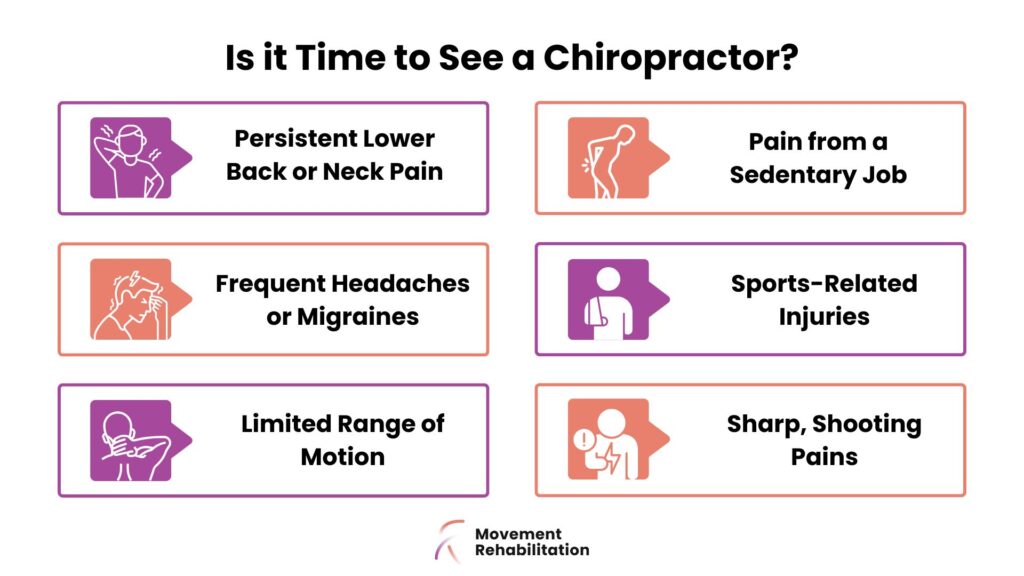
It can be difficult to know if your aches and pains warrant a visit to a chiropractor. While a GP should always be your initial point of contact for any new or severe pain, here are some common scenarios where people in Sydney seek chiropractic care:
- Persistent Lower Back or Neck Pain: If you've had a dull ache or sharp pain for more than a few weeks that isn't resolving on its own.
- Frequent Headaches or Migraines: Particularly if you suspect they are related to neck tension or poor posture.
- Limited Range of Motion: If you feel stiff and can't turn your head, bend, or move as freely as you used to.
- Pain from a Sedentary Job:Many Sydney office workers experience postural strain, leading to neck, shoulder, and back pain.
- Sports-Related Injuries: For issues like joint sprains, muscle strains, or to improve overall athletic performance.
- Sharp, Shooting Pains Such as sciatica, where pain radiates from your lower back down your leg.
Hydrotherapy vs Swimming
What Conditions Can a Chiropractor Treat?
When considering any treatment, it’s crucial to look at the scientific evidence. Chiropractic care has been studied for various conditions, with outcomes ranging from highly effective to inconclusive. Australia’s national public health information service, Healthdirect, provides a balanced overview of the current research.
| Condition | Evidence of Effectiveness | Key Findings | Low Back Pain | Strong | Chiropractic care has been shown to reduce pain and disability in the short term for both acute and chronic low back pain. |
|---|---|---|
| Neck Pain | Moderate / Mixed | The scientific evidence for the effectiveness of chiropractic treatment for neck pain is generally considered inconclusive. |
| Headaches | Moderate / Mixed | Some studies suggest it can be effective for tension headaches and headaches originating from the neck. |
| Sciatica | Moderate / Mixed | Manual therapy, including chiropractic adjustments, is often used to relieve the pressure causing sciatic nerve pain. |
| Migraines | Not Recommended | Due to the potential risks associated with cervical manipulation, neurologists often advise against chiropractic therapy for migraines. |
It’s essential to have a proper diagnosis from a healthcare professional, like a GP, before starting any new treatment. This ensures the chosen therapy is appropriate for your specific condition.
The Science BehChiro, Physio, or Exercise Physio?
Understanding the differences between these three allied health professions is key to finding the right care.
While all three help with pain and movement, their focus and methods differ significantly. This is especially important at Movement Rehabilitation, where we believe the right expertise, or a combination of the two, is critical for the best outcome.
| Feature | Chiropractor | Physiotherapist | Exercise Physiologist | Primary Focus | Spinal health, nervous system function, and joint alignment. | Broader musculoskeletal rehabilitation and movement disorders. | Chronic disease management and long-term wellness through exercise. |
|---|---|---|---|
| Primary Method | Primary Method Spinal manipulation (adjustments) and other manual therapies. | Exercise therapy, manual therapy, and various treatment modalities. | Clinical exercise prescription and supervised rehabilitation programs. |
| Best For | Acute back/neck pain, joint stiffness, and specific spinal issues. | Post-surgery rehabilitation, sports injuries, and mobility issues. | Managing chronic conditions (e.g., arthritis, diabetes), improving overall health, and preventing future injuries. |
| Our Approach | At Movement Rehabilitation, our incoming chiropractic service will be fully integrated with our core exercise physiology programs to address both immediate pain and long-term functional improvement. |
Your First Chiropractic Visit in Sydney: What to Expect
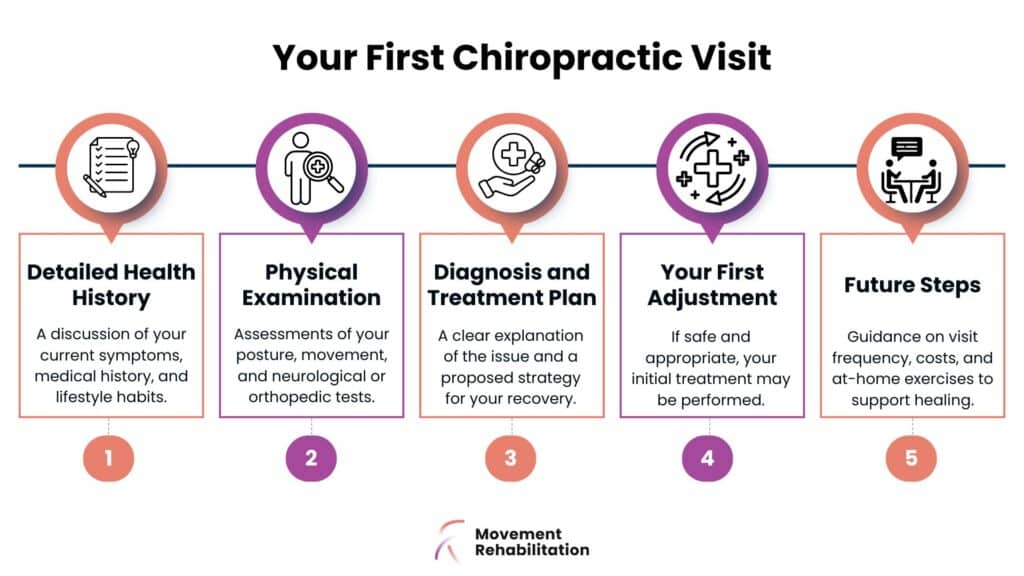
Your initial consultation is a comprehensive session designed to get a complete picture of your health. It is a systematic process to ensure your treatment is both safe and effective.
- Detailed Health History: Your chiropractor will ask about your current symptoms, past injuries, lifestyle (work, exercise, stress), and any pre-existing medical conditions.
- Physical Examination: This includes a postural assessment, range of motion tests, and specific orthopaedic and neurological tests to identify the cause of your problem.
- Diagnosis and Treatment Plan: Based on the findings, the chiropractor will explain their diagnosis, discuss a proposed treatment plan, and outline the expected benefits and any potential risks.
- Your First Adjustment: In many cases, your first treatment will be performed during this initial visit, provided it is deemed safe and appropriate.
- Future Steps: You’ll receive advice on the recommended frequency of visits, estimated costs, and any exercises or lifestyle modifications to support your recovery.
Common Chiropractic Techniques Explained
Not all chiropractic adjustments are the same. Your practitioner will choose the technique best suited to your condition. Some common methods include:
- Diversified Technique: The most common technique, involving a high-velocity, low-amplitude thrust to restore joint movement.
- Activator Method: A handheld instrument delivers a gentle, precise impulse to the spine.
- Flexion-Distraction: A specialised table is used to gently stretch the lower back, often used for disc issues.
- Drop-Piece Table: A section of the table drops slightly as the thrust is applied, making the adjustment more comfortable.
Is Chiropractic Safe? Understanding the Risks and Side Effects
When performed by a registered professional, chiropractic care is generally considered safe. The most common side effects are mild and temporary, similar to what you might feel after a new workout.
- Common Side Effects: Mild soreness, stiffness, or tiredness that usually resolves within 24-48 hours.
- Rare Risks: While extremely rare, there are risks associated with spinal manipulation, such as disc herniation or, in the case of neck adjustments, stroke. This is why a thorough initial examination is so important.
The Cost of Chiropractic Care in Sydney
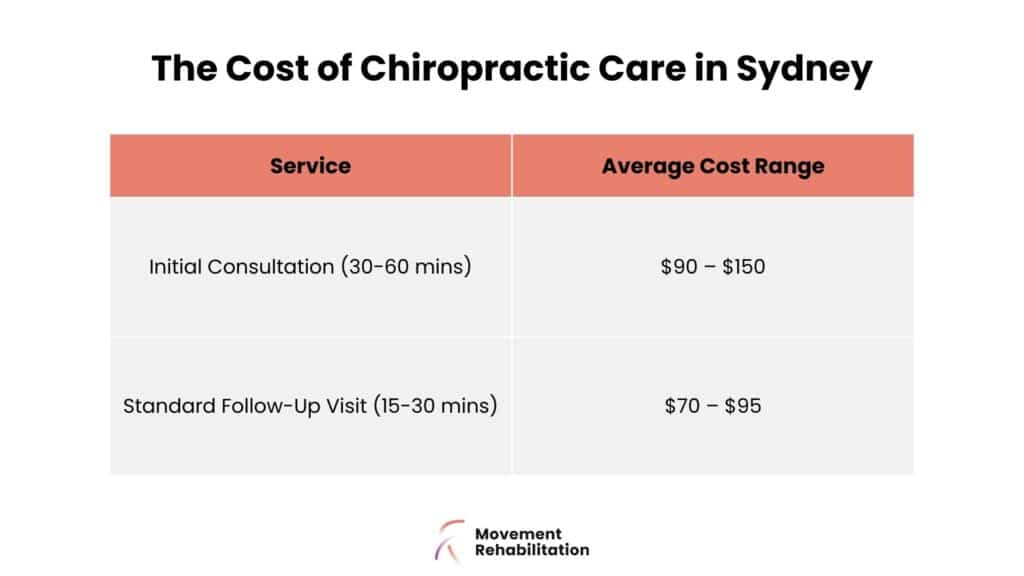
Transparency around cost is essential. While prices vary between clinics, here is a general guide to what you can expect to pay for chiropractic services in Sydney.
| Service | Average Cost Range (Sydney) | Initial Consultation (30-60 mins) | $90 - $150 |
|---|---|
| Standard Follow-Up Visit (15-30 mins) | In Australia, chiropractors complete a 5-year university degree and are registered allied health professionals, just like physiotherapists. |
| "The 'cracking' sound is your bones." | The sound is simply the release of gas bubbles from the fluid within your joints, similar to cracking your knuckles. It is not bones rubbing or breaking. |
Many clinics, including those in the Sydney CBD, offer a new patient special which can provide a more affordable entry point for your first visit.
Does Medicare Cover Chiropractic?
Generally, Medicare does not cover chiropractic services. However, there is an important exception.
If you have a chronic medical condition (one that has lasted more than six months), your GP can create a Chronic Disease Management (CDM) plan, previously known as an Enhanced Primary Care (EPC) plan.
Under this plan, you may be eligible for up to five Medicare-subsidised visits to a chiropractor per calendar year.
Most private health insurance policies with ‘extras’ cover offer rebates for chiropractic care. It’s always best to check with your specific fund to understand your level of cover.
Integrated Care for Lasting Results
Choosing a healthcare provider is about more than just the treatment; it is about the overall approach.
At Movement Rehabilitation, we are excited to integrate chiropractic care into our established exercise physiology services.
We believe this combination offers a uniquely powerful pathway to not just relieve pain, but to build a stronger, more resilient body for the long term.
Why an Integrated Approach Works Better:
- Address the ‘Why’: A chiropractic adjustment can provide immediate relief by restoring joint movement. Our exercise physiologists then address the underlying ‘why,’ specifically the muscle imbalances, weakness, or poor movement patterns that led to the problem in the first place.
- Faster, Longer-Lasting Relief: By combining hands-on treatment with targeted exercise, we help stabilise the spine and joints, making your adjustments hold for longer and reducing the likelihood of recurrence.
- A Truly Holistic Plan: Your care isn’t siloed. Our team collaborates to create a single, cohesive treatment plan that evolves as you progress from pain relief to functional strength and finally to long-term wellness.
If you’re in Sydney and looking for a solution that goes beyond temporary fixes, our integrated approach is designed for you. We don’t just want you to feel better; we want you to move better, for life.
Ready to take the first step towards a pain-free life? Contact our team at Movement Rehabilitation in Leichhardt to discuss how our unique, integrated approach to chiropractic care and exercise physiology can help you achieve your health goals.