

Exercise Physiology in Sydney
The Complete Guide to NDIS Exercise Physiology: Funding, Eligibility, and Outcomes
A comprehensive guide for NDIS participants, families, and support coordinators navigating exercise physiology funding, eligibility, and outcomes by Movement Rehabilitation.
Navigating the National Disability Insurance Scheme (NDIS) can often feel overwhelming, but accessing the right therapeutic supports should not be.
For participants looking to improve their physical function, manage chronic pain, or build independence, NDIS-funded Exercise Physiology offers a clear, scientifically backed pathway to better health.
This comprehensive guide cuts through the bureaucratic noise. It details exactly what Exercise Physiology is within the NDIS framework, how funding and eligibility work, and the tangible, evidence-based outcomes you can expect from an Accredited Exercise Physiologist.
What is an Accredited Exercise Physiologist (AEP)?
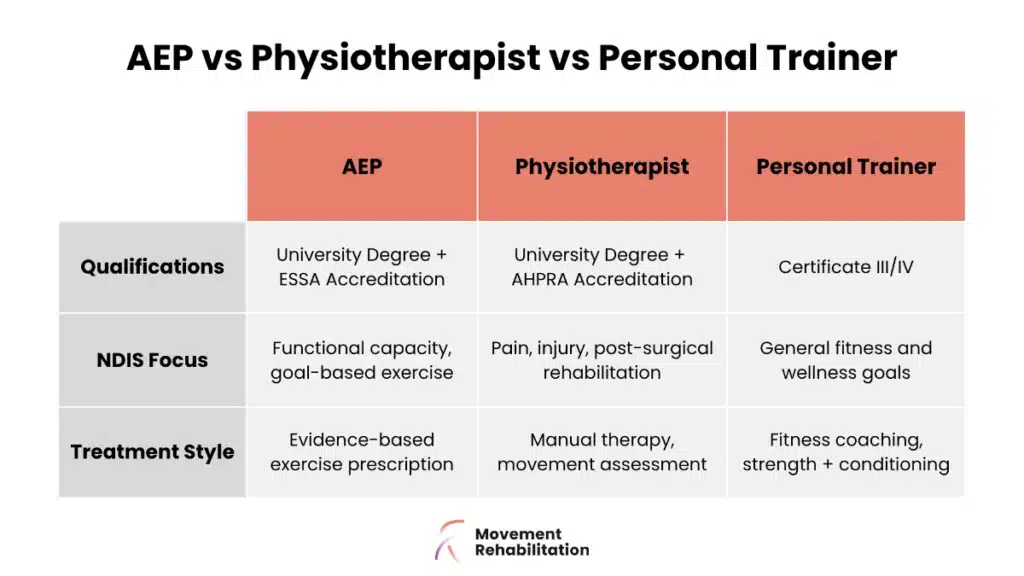
To practice in Australia, an AEP must hold accreditation with Exercise & Sports Science Australia (ESSA), ensuring they adhere to strict clinical standards and a rigorous code of ethics.
While many people confuse exercise physiologists with personal trainers or physiotherapists, their roles within the NDIS serve distinctly different purposes.
| Feature | Accredited Exercise Physiologist (AEP) | Physiotherapist | Personal Trainer |
|---|---|---|---|
| Primary Focus | Long-term management of chronic diseases, disabilities, and functional capacity through exercise. | Diagnosis, manual therapy, and treatment of acute injuries and pain. | General fitness, weight loss, and muscle toning for healthy individuals. |
| Qualifications | Minimum 4-year university degree in Clinical Exercise Physiology. | Minimum 4-year university degree in Physiotherapy. | Certificate III & IV in Fitness. |
| NDIS Role | Capacity building, long-term behaviour change, and functional independence. | Acute rehabilitation, mobility aids, and short-term pain relief. | Not a registered allied health professional. |
In the context of the NDIS, an AEP focuses on the “rehabilitation to independence” phase.
They use exercise as medicine to help participants build the long-term strength and conditioning required to achieve their daily living goals.
NDIS Eligibility: Who Can Access Exercise Physiology?
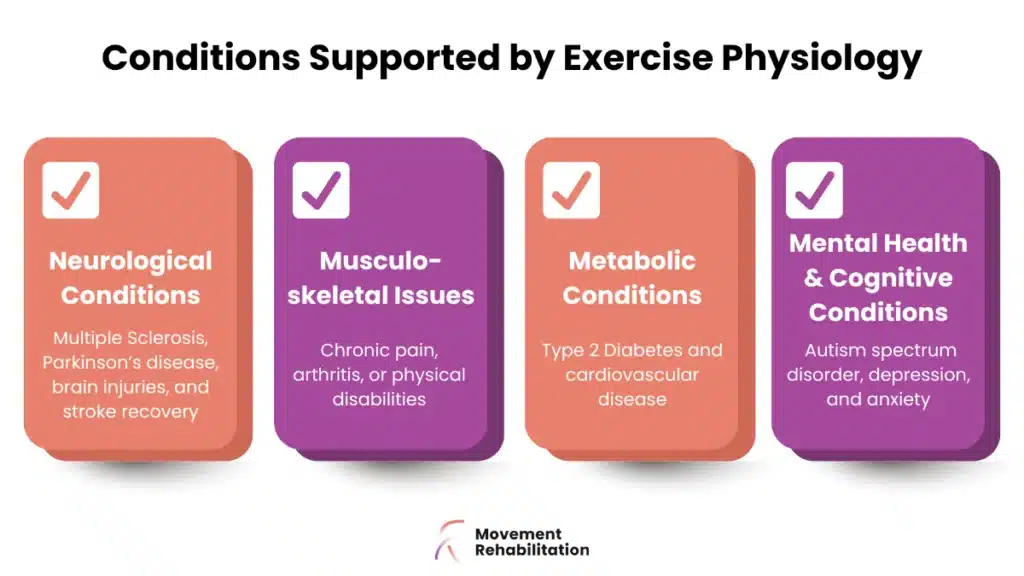
This means the service must directly relate to your disability, assist you in pursuing your goals, and be likely to be effective and beneficial for your specific circumstances.
Exercise Physiology is highly adaptable and benefits a wide spectrum of NDIS participants. You may be eligible if you are managing conditions such as:
- Neurological Conditions: Including Multiple Sclerosis (MS), Parkinson’s disease, acquired brain injuries, and stroke recovery, where exercise supports neuroplasticity and motor control.
- Musculoskeletal Issues: Including chronic pain, arthritis, or physical disabilities requiring improved mobility and falls prevention.
- Metabolic Conditions: Such as Type 2 Diabetes or cardiovascular disease, where tailored movement is essential for disease management.
- Mental Health and Cognitive Conditions: Including autism spectrum disorder (ASD), depression, and anxiety, where structured physical activity helps regulate behaviour, improve sensory processing, and boost mental wellbeing.
“Exercise is considered by some experts to be the single most effective nonpharmacological approach for improving functional outcomes and managing symptoms for people living with disability.”
How is Exercise Physiology Funded Under the NDIS?
Exercise Physiology is funded under the Capacity Building support purpose in your NDIS plan. The NDIA recognises that clinical exercise interventions build a participant’s capacity to live more independently.
Funding for an AEP typically falls under one of two specific categories:
- Capacity Building – Improved Health and Wellbeing: This is the most common category for Exercise Physiology. It specifically covers activities that support, maintain, or increase physical mobility and well-being.
- Capacity Building – Improved Daily Living: This category funds assessment, training, or therapy to help increase your skills, independence, and community participation.
Understanding Pricing and Plan Management
The NDIA sets maximum price limits for allied health services to ensure fairness and consistency.
For the 2024–2025 period, the standard hourly rate for Exercise Physiology in major cities and inner regional areas (MMM 1–5) is A$166.99. Rates are slightly higher for remote and very remote areas.
How you manage your NDIS funding will dictate how you engage with your provider:
- Self-Managed: You have total control and can choose any provider, whether they are NDIS-registered or unregistered, paying invoices directly.
- Plan-Managed: A Plan Manager handles the administration and payments. You still retain the flexibility to choose registered or unregistered AEPs.
- NDIA-Managed (Agency Managed): The NDIA pays providers directly on your behalf, but you are restricted to using only officially NDIS-registered providers.
Expected Outcomes and Real-World Benefits
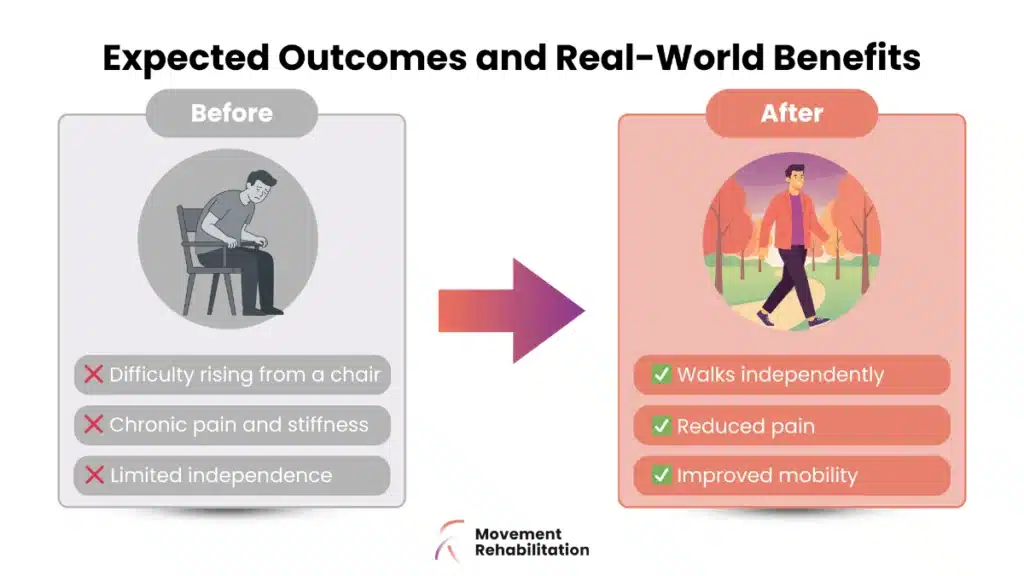
AEPs do not provide generic workout routines; they deliver clinical interventions designed to translate into real-world independence.
Research consistently demonstrates that targeted exercise interventions enhance movement efficiency, motor control, and functional capacity.
When setting goals for your NDIS plan, it is vital to link the therapy to practical outcomes. Instead of a vague goal like “getting fitter,” a measurable NDIS goal looks like: “I want to improve my lower body strength and balance so I can safely walk to my local café without assistance.”
Participants engaging in consistent Exercise Physiology can expect outcomes such as:
- Increased Functional Capacity: The ability to perform daily tasks, such as getting out of bed, carrying groceries, or showering, with less fatigue and reliance on support workers.
- Pain Reduction: Strengthening the muscles around affected joints to alleviate chronic pain and stiffness.
- Improved Mental Health: Structured movement is a proven method for reducing symptoms of anxiety and depression, building confidence, and fostering social participation.
From Plan to Practice
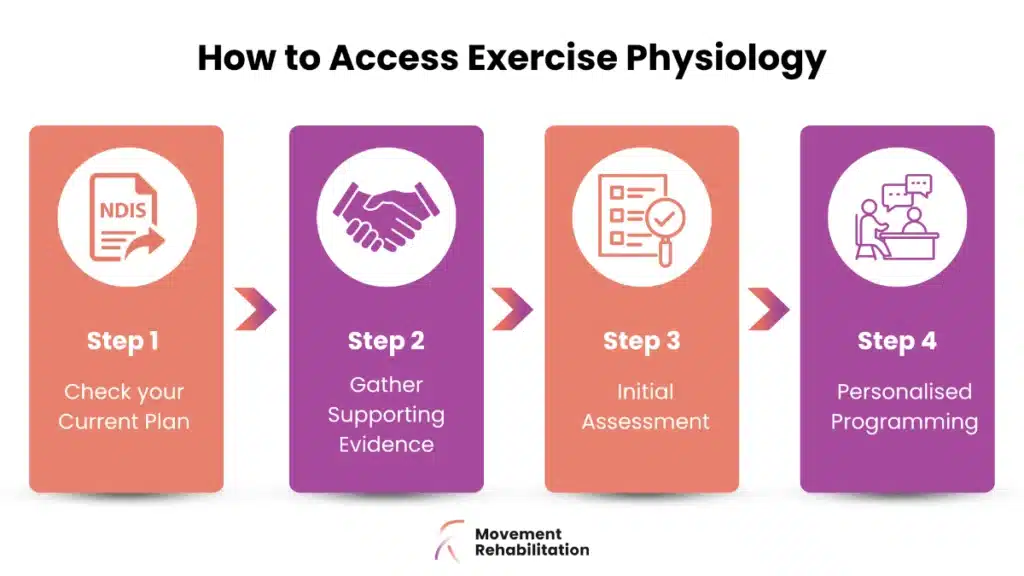
Incorporating Exercise Physiology into your NDIS journey is a straightforward process when you know the steps.
- Check Your Current Plan: Review your NDIS plan to see if you have funding allocated under ‘Improved Health and Wellbeing’ or ‘Improved Daily Living’. If you do not, you will need to request this at your next plan reassessment.
- Gather Supporting Evidence: Work with your General Practitioner or current allied health team to gather medical reports and letters of recommendation. You must demonstrate how an AEP will help you achieve your specific NDIS goals.
- Initial Assessment: Once funded, your chosen AEP will conduct a comprehensive initial assessment. They will evaluate your medical history, physical capabilities, and personal goals to establish a baseline.
- Personalised Programming: Your AEP will design a tailored, evidence-based exercise program. This program will be regularly monitored, adjusted as you progress, and reported back to the NDIA to ensure continued funding and success.
Conclusion
Exercise Physiology is a vital tool for NDIS participants seeking to take control of their physical health, manage chronic conditions, and build lasting independence.
By partnering with an Accredited Exercise Physiologist, you gain access to safe, scientifically backed interventions tailored specifically to your goals.
At Movement Rehabilitation, our clinical understanding of how the body responds to exercise allows us to help clients across Sydney improve their quality of life.