

Hydrotherapy for Osteoarthritis
How Warm Water Rehabilitation Reduces Joint Pain
Osteoarthritis is the most common musculoskeletal condition in Australia, with over 2.1 million people currently managing the disease.
For many, the standard medical advice to “stay active and exercise” feels like a cruel paradox — when the cartilage in your knees, hips, or spine has worn down, land-based exercise often causes sharp, immediate pain, triggering a cycle of inactivity, muscle atrophy, and further joint degradation.
This is where clinical hydrotherapy changes the rehabilitation picture.
Hydrotherapy — or aquatic exercise physiology — is not simply a warm bath or a casual swim. It is a clinically prescribed environment that uses the physical properties of water to offload damaged joints while simultaneously building the muscular strength required to support them.
Why Hydrotherapy Works
When you step into a clinical hydrotherapy pool, three distinct forces begin working on your body immediately.
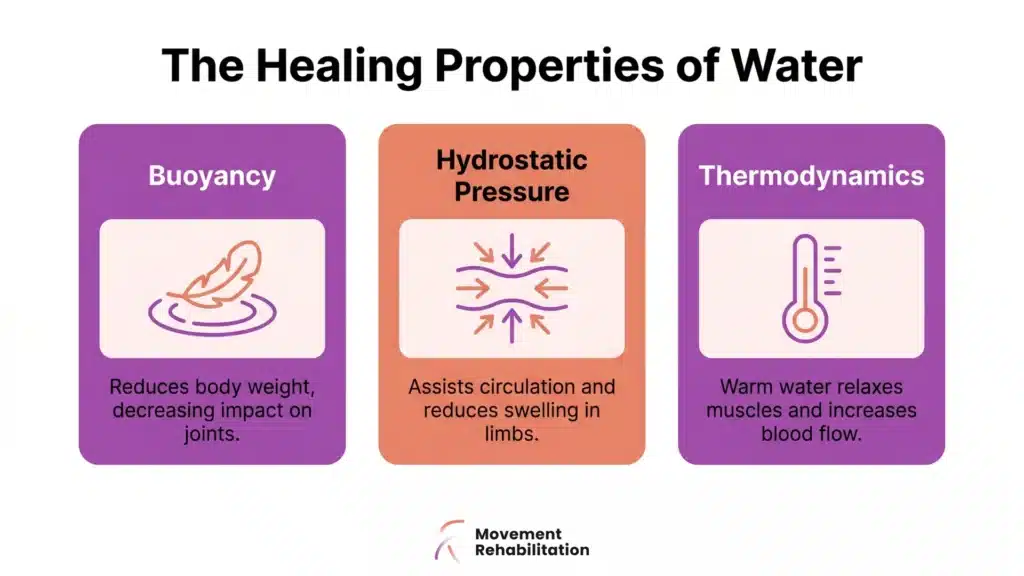
1. Buoyancy
Gravity is the primary enemy of an arthritic joint. Every step on land sends a shockwave through your knees and hips. Water counteracts this through buoyancy:
- At waist depth, your effective body weight is reduced by approximately 50%
- At chest depth, this reduction increases to around 75%
- At neck depth, up to 90% of your body weight is supported by the water
This dramatic offloading allows patients to perform functional movements — squats, lunges, step-ups — that would be far too painful on land.
2. Hydrostatic Pressure
Osteoarthritis frequently causes joint effusion: painful swelling from excess fluid trapped in the joint capsule. Water exerts constant, even pressure on the body from all directions. This hydrostatic pressure:
- Actively reduces joint swelling by pushing fluid back into the lymphatic system
- Decreases joint stiffness and improves range of motion
- Provides a consistent, supportive sensation that reduces the fear of movement
3. Thermodynamics
Clinical hydrotherapy pools are maintained at a therapeutic temperature of 33°C to 35°C. This warmth produces two key effects:
- Vasodilation: Blood vessels widen, increasing oxygen and nutrient delivery to damaged tissues
- Pain gating: The constant sensory input of warm water on the skin blocks pain signals travelling to the brain — a neurological mechanism known as the Gate Control Theory of Pain
What the Research Shows
The evidence is consistent across multiple meta-analyses.
| Clinical Outcome | What the Evidence Shows | Pain Reduction | Average 5-point drop on a 100-point pain scale vs. non-exercise control groups |
|---|---|
| Physical Function | Improved walking speed, stair-climbing times, and knee extensor strength |
| Quality of Life | Measurable improvements in psychological well-being and daily functional independence |
What Happens in an AEP Hydrotherapy Session?
A common concern is that hydrotherapy requires swimming ability. It does not. Your head remains above water at all times, and your feet stay on the pool floor throughout.
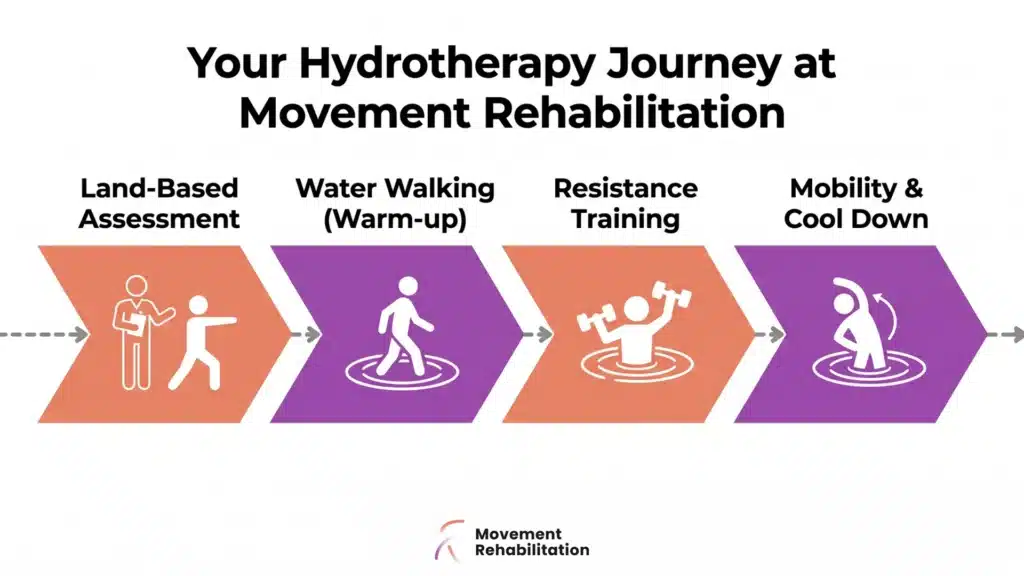
A typical AEP-supervised hydrotherapy session follows a structured progression:
- Initial Assessment (on land) — Your AEP reviews your pain levels, range of motion, and any co-existing conditions before you enter the water.
- Warm-Up — Water Walking — Multidirectional walking (forwards, sideways, backwards) to acclimatise the body and gently elevate heart rate.
- Targeted Resistance Training — Using aquatic dumbbells, kickboards, or resistance paddles, your AEP guides you through exercises targeting:
- Quadriceps and hamstrings (primary knee stabilisers)
- Glutes and hip abductors (hip joint support)
- Core muscles (spinal load management)
- Mobility & Cool Down — Gentle range-of-motion movements to finish, reducing post-session stiffness.
Water provides dynamic resistance — the harder you push against it, the more it pushes back — meaning the same exercise becomes progressively more challenging as your strength improves.
The Exercise Physiologist Advantage
General water aerobics classes are beneficial for fitness, but they lack the clinical specificity needed to rehabilitate osteoarthritis. An Accredited Exercise Physiologist (AEP) brings a university-qualified, medically grounded approach to your programme.
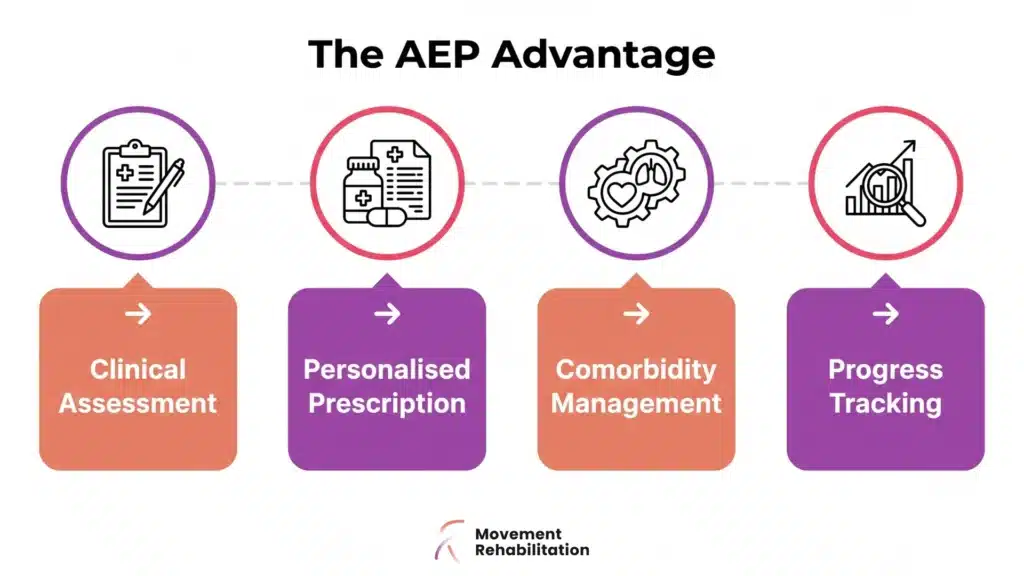
Here is what distinguishes an AEP-led session from a general class:
- Clinical Assessment — Your AEP evaluates your biomechanics, gait, and pain pattern before prescribing any exercise.
- Personalised Prescription — Exercise type, depth, intensity, and duration are tailored specifically to your condition and tolerance.
- Comorbidity Management — Osteoarthritis rarely exists alone. An AEP is trained to safely manage co-existing conditions such as hypertension, cardiovascular disease, or type 2 diabetes alongside your joint rehabilitation.
- Progress Tracking — Your AEP monitors outcomes over time and adjusts your programme as your strength and mobility improve.
Frequently Asked Questions
Do I need to know how to swim?
No. All exercises are performed standing in shallow to waist-deep water. You will always have your feet on the floor and access to handrails throughout the session.
Is hydrotherapy covered by Medicare or the NDIS?
Yes. With a Chronic Disease Management (CDM) plan from your GP, you may be eligible for Medicare rebates on Exercise Physiology sessions. Hydrotherapy is also an approved capacity-building support under the NDIS.
How warm is a clinical hydrotherapy pool?
Clinical hydrotherapy pools are heated to 33°C–35°C — significantly warmer than a standard lap pool — to promote muscle relaxation and pain relief.
How many sessions will I need?
The RACGP recommends a minimum of 2–3 sessions per week over 12 weeks as a standard programme duration. Your AEP will advise based on your individual presentation and goals.