

Managing Type 2 Diabetes with Clinical Exercise: A Physiology Perspective
Type 2 diabetes is the fastest-growing chronic condition in Australia, currently affecting almost 1.3 million people, with hundreds more diagnosed every day.
For many, the diagnosis comes with a prescription pad full of medications and a vague directive to “lose weight and get active.”
However, exercise does far more than burn calories — when prescribed correctly, it directly changes how your body processes sugar.
When prescribed correctly, exercise is a highly specific, dose-dependent medicine. It directly alters how the body processes glucose at a cellular level, often achieving results comparable to pharmacological interventions.
This guide explores the physiological mechanisms behind exercise and diabetes, the clinical evidence supporting different training modalities, and why an Accredited Exercise Physiologist (AEP) is essential for effective management.
How Exercise Lowers Blood Glucose
To understand why exercise is so effective for managing Type 2 diabetes, it is necessary to look at what happens inside the muscle cell.
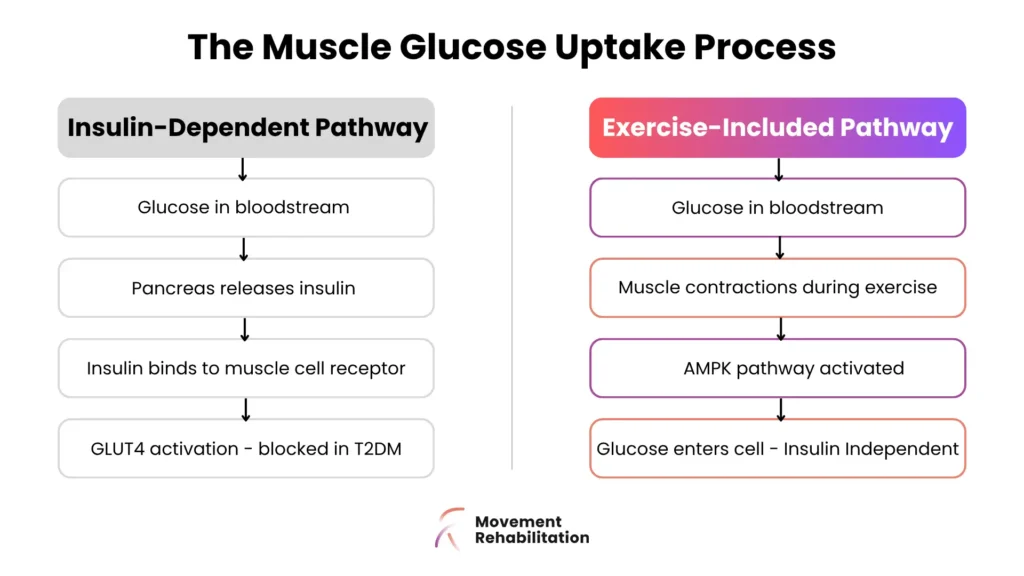
In a healthy body, the hormone insulin acts as a key, unlocking cells so that glucose from the bloodstream can enter and be used for energy.
In Type 2 diabetes, the cells become resistant to this key, leaving excess glucose trapped in the blood.
Exercise provides a physiological bypass to this problem. When muscles contract during physical activity, they stimulate the movement of specific proteins called GLUT-4 transporters to the surface of the muscle cell.
These transporters act as secondary doors, allowing glucose to enter the muscle completely independent of insulin.
This mechanism provides two distinct benefits for glycaemic control:
- The Acute Effect: A single bout of exercise immediately increases glucose uptake by the working muscles. This effect can keep blood glucose levels lowered for anywhere from 2 to 24 hours post-exercise, depending on the intensity and duration of the session.
- The Chronic Effect: Consistent, long-term exercise induces structural adaptations in the body. It increases the overall density of mitochondria (the energy powerhouses of the cell) and builds more muscle mass. Because skeletal muscle is the body’s largest storage site for glucose, increasing muscle mass directly increases your capacity to clear glucose from the bloodstream, thereby improving baseline insulin sensitivity.
Aerobic vs. Resistance Training
The current clinical guidelines for diabetes management recommend a combination of both aerobic and resistance training for optimal results.
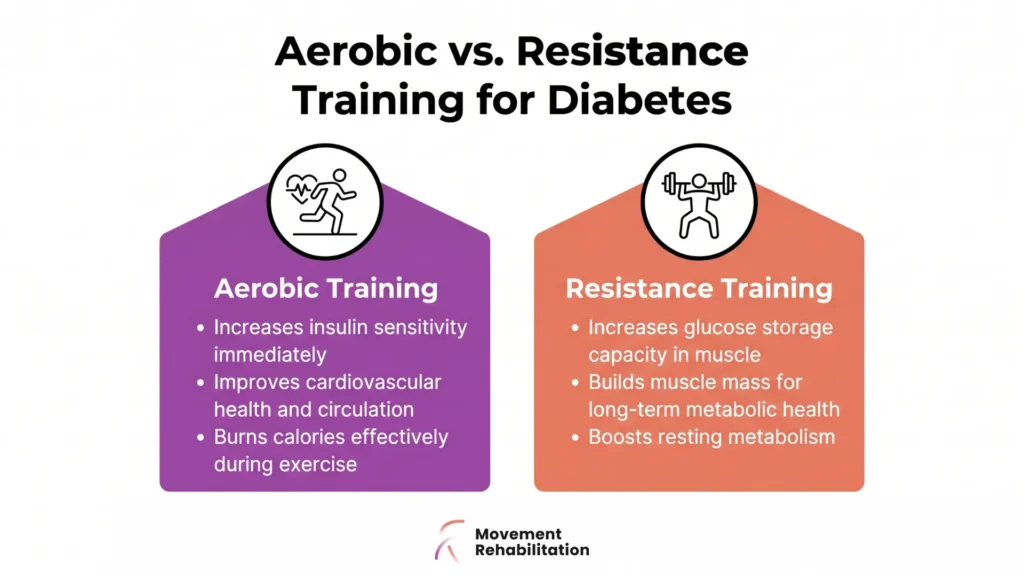
While many Australians engage in some form of aerobic exercise, such as walking, resistance training is frequently overlooked, despite being arguably the most critical component for long-term metabolic health.
| Training Modality | Physiological Mechanism | Primary Benefit for Type 2 Diabetes | Aerobic Training (e.g., brisk walking, cycling, swimming) | Increases heart rate, improves mitochondrial density, and enhances cardiovascular efficiency. | Lowers blood sugar during and after exercise, reduces the risk of heart disease, and helps your body use energy more efficiently. |
|---|---|---|
| Resistance Training (e.g., lifting weights, using resistance bands) | Stimulates muscle hypertrophy (growth) and increases the number of GLUT-4 transporters. | Builds muscle, which acts as the body's main storage site for sugar — the more muscle you have, the better your body manages blood glucose day to day. |
Research shows that doing more than 150 minutes of exercise per week, especially a mix of cardio and strength training can meaningfully lower HbA1c, the blood test that shows your average blood sugar over the past three months.
The Power of High-Intensity Interval Training (HIIT)
For decades, moderate-intensity continuous training (MICT) was the gold standard for diabetes management.
However, recent evidence has highlighted the metabolic benefits of High-Intensity Interval Training (HIIT).
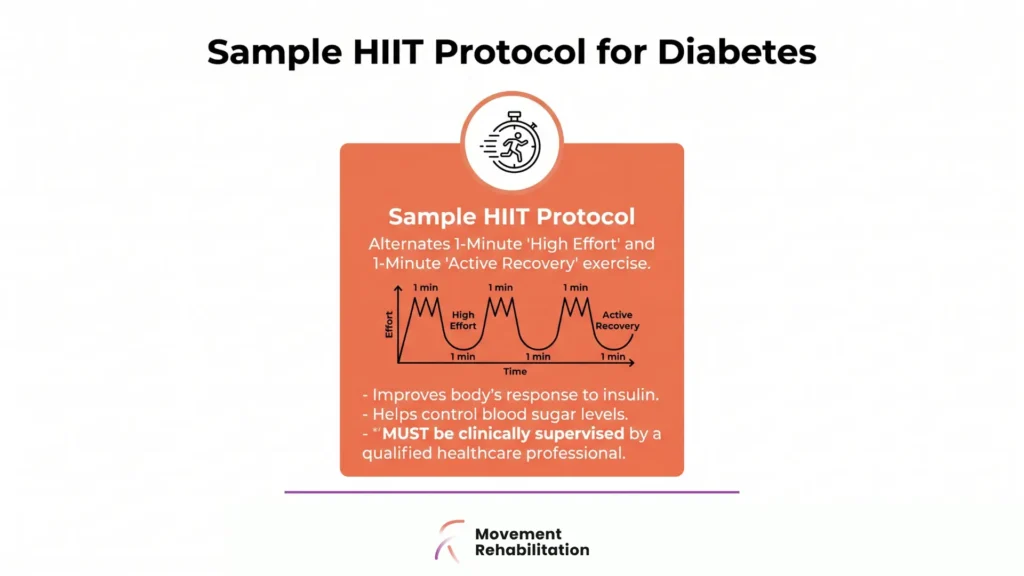
HIIT involves short, intense bursts of exercise followed by brief periods of rest or low-intensity recovery.
From a physiological perspective, the high energy demand of HIIT rapidly depletes muscle glycogen stores, which creates a powerful stimulus for the body to pull glucose from the blood to replenish those stores post-workout.
Clinical trials have shown that low-volume HIIT can be just as effective, and in some cases, more effective, than traditional moderate-intensity exercise at improving insulin sensitivity, reducing fasting blood glucose, and lowering cardiovascular risk factors in patients with Type 2 diabetes.
Furthermore, HIIT addresses one of the most common barriers to exercise: a lack of time. By condensing the physiological stimulus into a shorter session, patients are often more likely to adhere to the programme.
HbA1c and Diabetes Remission
The ultimate goal of any diabetes intervention is to achieve measurable, clinical outcomes.
The most reliable metric for this is HbA1c, which reflects average blood glucose levels over the preceding two to three months.
While this percentage may sound small, a reduction of just 1% in HbA1c is associated with a significantly lower risk of microvascular complications, such as neuropathy (nerve damage), retinopathy (eye damage), and nephropathy (kidney disease).
“Increasing evidence has emerged that Type 2 diabetes remission is possible with intensive lifestyle interventions. By aggressively targeting insulin resistance through diet and structured exercise, patients can achieve normal blood glucose levels without the need for glucose-lowering medications.”
– Hocking et al., University of Sydney, 2024
The concept of diabetes remission, where blood glucose returns to non-diabetic levels without medication, is gaining significant traction in the medical community.
While it requires dedication, structured resistance and aerobic training are foundational pillars of any remission strategy.
Why You Need an Accredited Exercise Physiologist (AEP)
While general physical activity is beneficial, prescribing exercise for a complex metabolic condition requires clinical expertise.
This is where an Accredited Exercise Physiologist (AEP) differs fundamentally from a standard personal trainer.
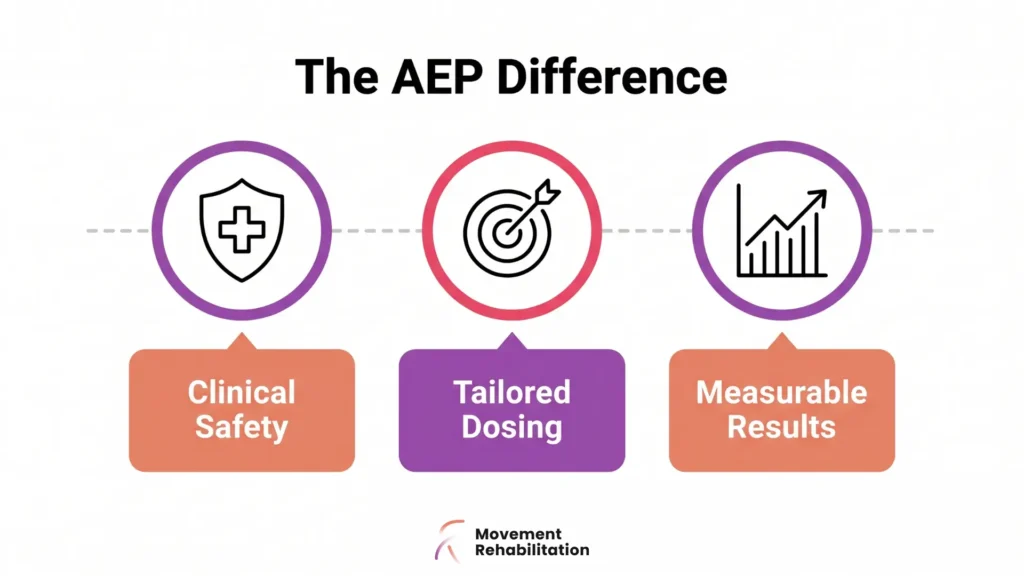
An AEP is a university-qualified allied health professional trained to use exercise as medicine. When managing Type 2 diabetes, an AEP ensures clinical safety by:
- Managing Comorbidities: Most patients with Type 2 diabetes also present with other conditions, such as hypertension, osteoarthritis, or cardiovascular disease. An AEP designs programmes that safely accommodate these overlapping issues without causing exacerbation.
- Preventing Hypoglycaemia: Exercise can cause blood sugar to drop too low, especially for patients on insulin or certain oral medications. An AEP understands the pharmacokinetics of your specific medications and times the exercise dose to prevent dangerous hypoglycaemic events.
- Monitoring and Progression: An AEP does not provide a generic template. They monitor your physiological response, track your blood glucose trends, and progressively overload the exercise stimulus to ensure you continue making metabolic gains.
Conclusion
Type 2 diabetes is a serious, progressive condition, but it is highly responsive to the right interventions.
By treating exercise as a precise, prescribed medication, you can fundamentally alter your body’s physiology, improve your insulin sensitivity, and take control of your long-term health.
At Movement Rehabilitation, our Accredited Exercise Physiologists specialise in evidence-based management of chronic conditions.
We look beyond simple weight loss, focusing on the physiological adaptations required to lower your HbA1c and improve your functional capacity.
If you are ready to approach your diabetes management with a clinical, targeted exercise programme, contact our Leichhardt clinic today to book your initial assessment.